
Art Nouveau Design Style
Inspired directly from the curvilinear forms of nature.
Casting off the weight of the previous hundred years of architecture and design, the Art Nouveau style created a sensation when it burst onto the Paris and London scenes at the turn of the twentieth century. It announced itself not quietly, but with confidence and exuberance, offering a radically new visual language at a moment when the modern world was rapidly taking shape.
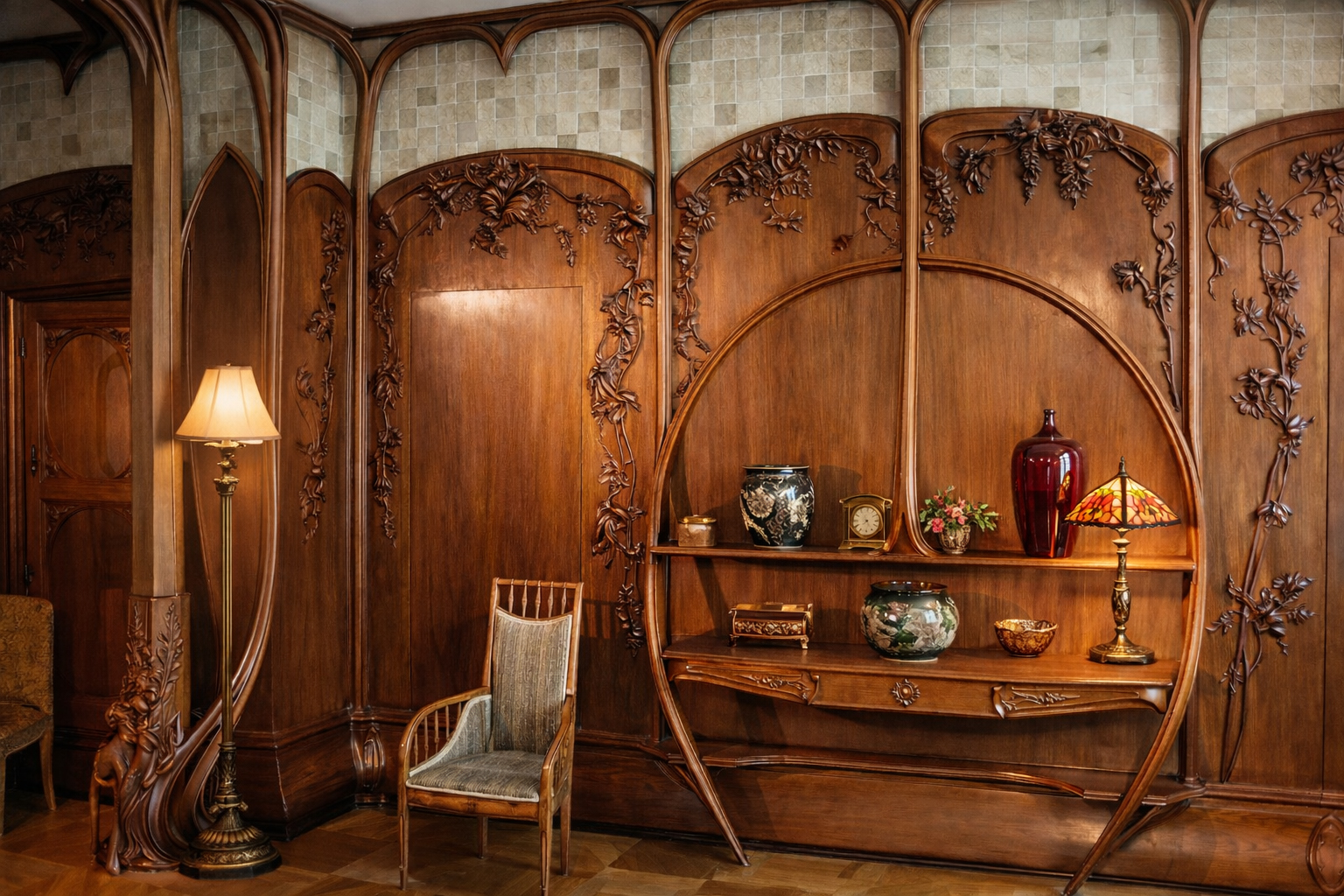
Although Art Nouveau may appear harmlessly pretty to contemporary eyes, late Victorians found its flamboyance shocking. It was a style that provoked strong reactions—most people either loved it or hated it. As the first truly modern design movement, Art Nouveau made a deliberate break with historical revivalism and academic tradition, dissolving long-standing boundaries between the fine arts and the decorative arts.
Practitioners such as Aubrey Beardsley, Antonio Gaudí, and Gustav Klimt drew their inspiration directly from the natural world. From vines and flowers to waves, wings, and tendrils, they developed an entirely new design lexicon of highly stylized organic forms, expressed through fluid lines and exuberantly flowing shapes that seemed to grow rather than be constructed.
Applied artists were not far behind. Architect and designer Charles Rennie Mackintosh and glassmaker Louis Comfort Tiffany translated Art Nouveau’s ideals into furniture, architecture, and objects for daily life. Soon, spiderwebs, dragonflies, dogwoods, peacock feathers, poppies, locusts, and thistles buzzed and blossomed across wallpaper, furniture, textiles, lighting, and decorative accents, bringing nature indoors in endlessly inventive ways.
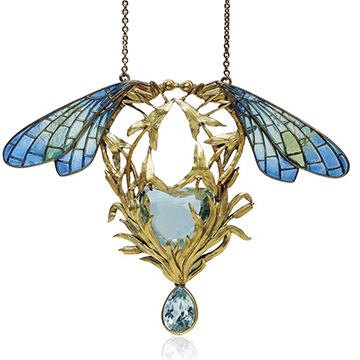
Dragonfly jewelry
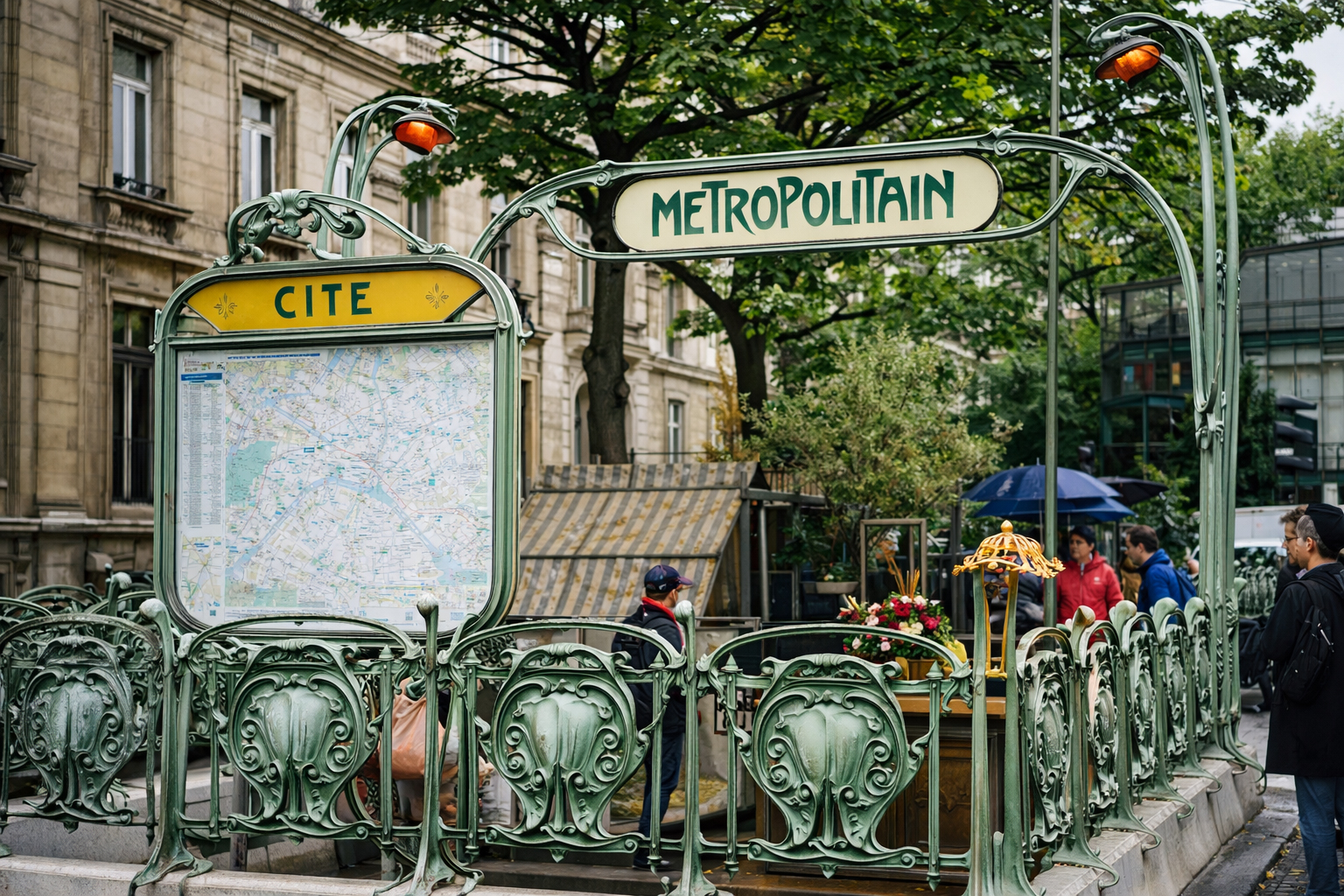
The Paris Métro system remains one of the most celebrated examples of Art Nouveau applied to public space. Its iconic entrances, with their sinuous ironwork and organic lettering, transformed the act of entering the subway into an encounter with art—beautiful, functional, and unmistakably modern.
Throughout Art Nouveau interiors, sinuous lines, elaborate patterns, and flat, asymmetrical compositions inspired by Japanese prints were carved, cast, or painted onto nearly every available surface. Color palettes ranged from softly muted sage and mustard to richly opulent lilac, gold, salmon, and robin’s egg blue, reinforcing the movement’s blend of elegance and vitality.
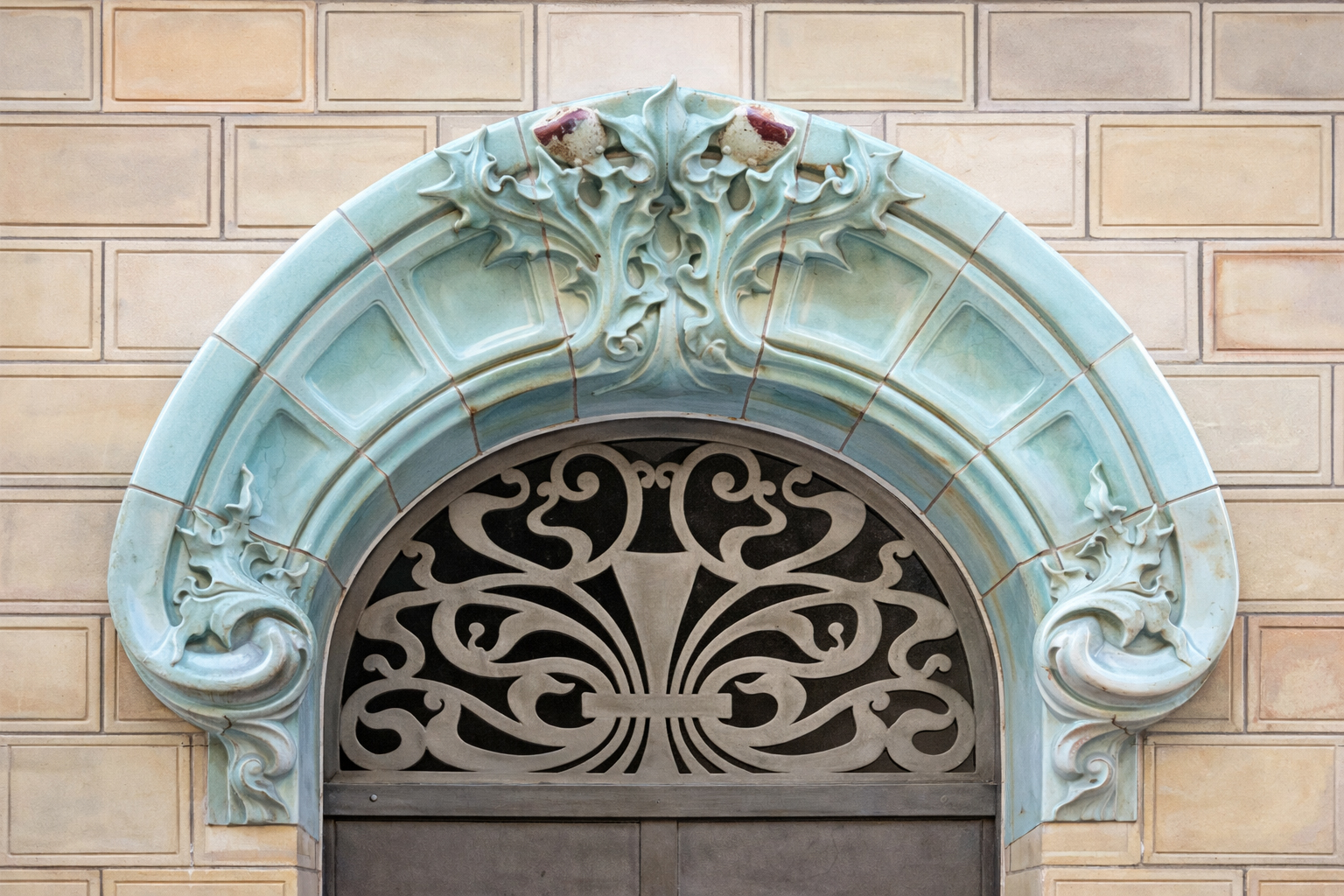
Exterior architectural details in the Art Nouveau style express the movement’s devotion to organic form and artistic unity. Facades were treated as living surfaces rather than static walls, animated by flowing lines, rhythmic curves, and sculptural ornament that seemed to grow naturally from the structure itself. Stone, brick, iron, glass, and ceramic were shaped into sinuous motifs—vines, blossoms, tendrils, and whiplash curves—that softened architectural mass and replaced rigid symmetry with movement and grace.
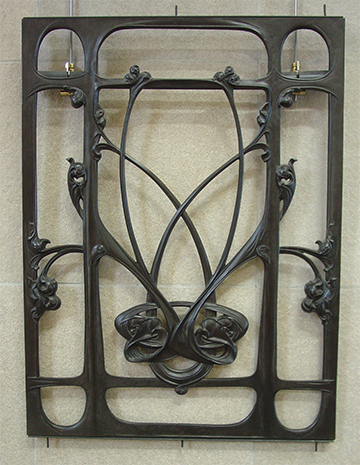
Balconies, railings, and gates were often crafted in wrought iron, their looping forms echoing stems, wings, and curling leaves. Windows and door surrounds were framed with carved stone or molded plaster that flowed seamlessly into the façade, while stained or etched glass introduced color, light, and pattern. Even functional elements such as signage, street lamps, rooflines, and cornices were designed as ornamental features, reinforcing the belief that beauty should permeate every aspect of the built environment.
In Art Nouveau exteriors, architecture became expressive and immersive—structures appeared less like inert buildings and more like living organisms, responding to light, weather, and the rhythms of the street. This integration of structure and ornament transformed cityscapes, giving Art Nouveau buildings a sense of vitality, elegance, and unmistakable modernity.
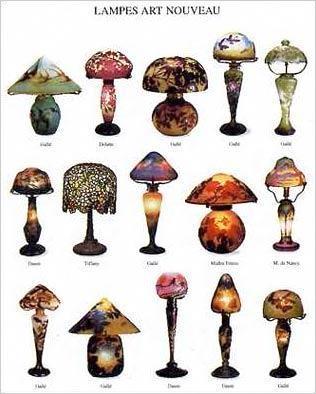
Ornament, above all, was the soul of Art Nouveau design. The movement held that no object was so mundane that it could not be made beautiful. Essential Art Nouveau accessories often begin with art glass: jewel-toned Tiffany stained glass, delicately etched Lalique glass, or Gallé cameo glass, in which raised floral designs are revealed by carefully cutting away layers of colored glass with acid. These pieces capture the spirit of the era and offer an ideal starting point for any collection.
Mackintosh-style ornaments are widely available as well—reflecting his belief that good design should permeate every aspect of life, from the monumental Glasgow School of Art to chairs, textiles, and jewelry boxes. Elegant posters by Alphonse Mucha or Jules Chéret add further period flair, celebrating theater, music, and the modern woman in flowing lines and luminous color. And while an original Tiffany lamp now commands a fortune, it is worth remembering that Art Nouveau was conceived for thoughtful mass production. High-quality reproductions are widely available today, allowing the movement’s enduring vision of beauty, craftsmanship, and harmony to continue enriching contemporary interiors.
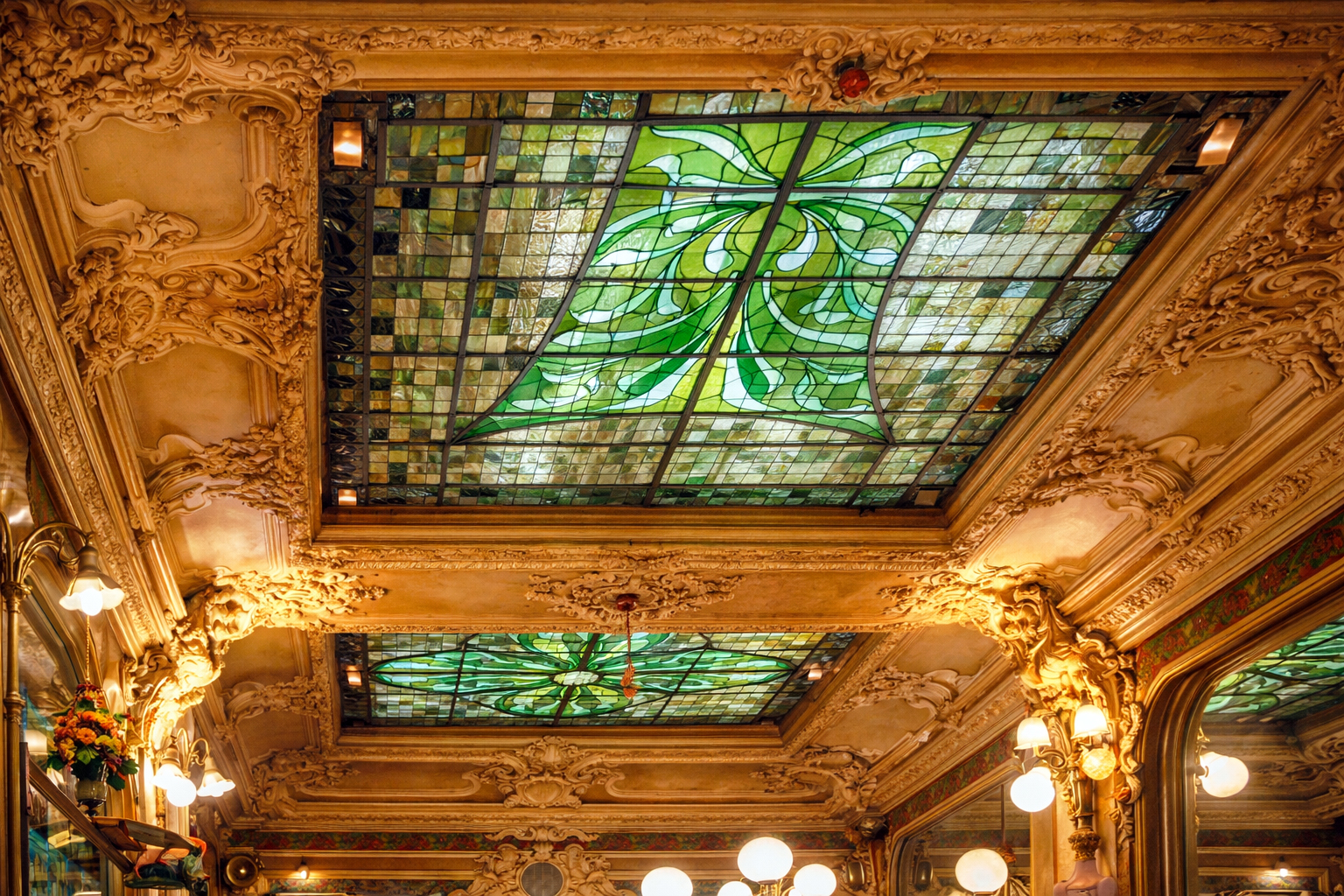
This Art Nouveau gallery ceiling is a luminous celebration of craftsmanship, light, and organic form. Broad stained-glass skylights float within a richly sculpted framework of plaster and gilt, their sinuous botanical motifs unfolding like leaves and petals across the ceiling plane. Soft greens and opalescent whites filter daylight from above, bathing the interior below in a gentle, ever-changing glow.
Surrounding the glass panels, elaborate plaster moldings ripple with vines, blossoms, and flowing tendrils—hallmarks of the Art Nouveau impulse to dissolve rigid architectural boundaries in favor of movement and natural rhythm. Every curve appears to grow effortlessly from the next, uniting structure and ornament into a single, harmonious composition.
The ceiling’s warm, golden tones are punctuated by round globe lights and mirrored wall panels, enhancing both brightness and depth while reinforcing the period’s fascination with reflection, transparency, and modern materials. More than a decorative surface, this ceiling transforms the gallery into an immersive environment—one where architecture, art, and light are inseparable, and nature is re-imagined through skilled human hands.
Step-by-step Tutorial
Hand Painted Floor Cloth
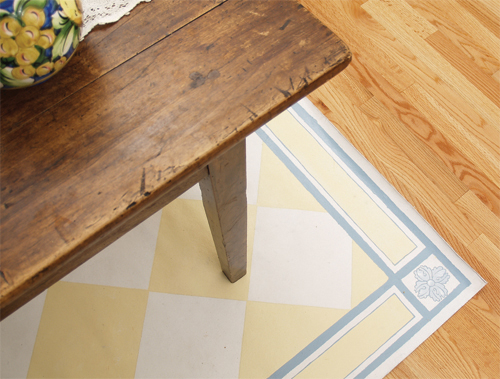
Freshen any room with this creative checker board painted floor cloth.
The magic of a painted floor cloth is its ability to transform a common space into a unique and beautiful expression of you and your family’s personality. Use these versatile cloths for entrance floors, children's rooms, porches, or just about anywhere.
In a Art Nouveau-inspired interior, graphic patterns feel especially at home—checkerboards, diamonds, sunbursts, and stepped “ziggurat” borders echo the period’s love of geometry. Because each cloth is hand painted, it can be customized to harmonize with a room’s palette—ivory and black for classic glamour, slate and brass for a softer modern take, or lacquer-red accents for a bolder, theatrical note.
Due to the hand painted nature of each floor cloth there is a great opportunity to customize an interior detail to the home, adding quirky elements and personal touches that help create singularly unique painted floor cloths.
Learn how to create a floor canvas painting!
Feature Video
Antiquing Video Tutorial
Turn ordinary objects into heirlooms! Creating the 'Classic Antique' glaze finish for objects, furniture, walls and more. This detailed step-by-step tutorial shows how to mix the right colors to create the perfect antiquing solution for any object, furniture, picture frame and more.
Feature Product
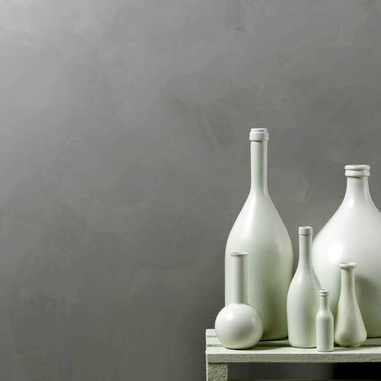
Lithos Venetian Plaster
Finishing Venetian Plaster with natural polished marble effect
Lithos is the contemporary version of the famous ancient Stucco Veneziano. It is a beautiful and highly refined decorative finish for hotels, offices, shops, exhibition halls, living rooms, etc. Ideal for all types of interior surfaces such as cement renders, Gypsum plasters, prefabricated panels wood and its by-products, as long as sufficiently smooth. With the range of colours and the applicator’s capacity and inspiration, it is possible to attain a variety of designs and chromatic effects. The resulting coating, in addition to being highly attractive, is abrasion resistant and washable.
Spread rate: 35 to 45 sq. ft. per quart.
0.8 - 1.0 kg/m² (for a recommended dry film thickness of 1,0 mm)
Learn more and Buy Lithos Now!
Early American Style
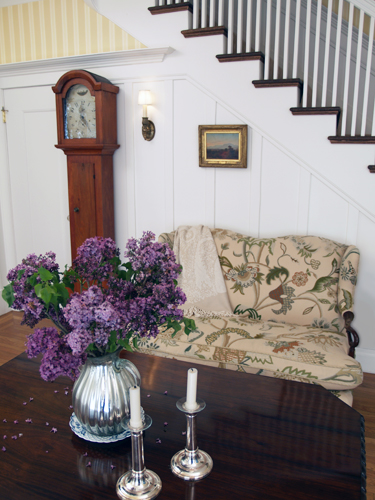
Colonial Amercians drew inspriation from their European heritage. Curent design styles would filter across the ocean and become reinventedin early America. Proportion and scale took reign over ornementation, A neutral color palette of grey blue, greens and rose pinks is readily apparent.
Stucco Rustico - Aged Plaster
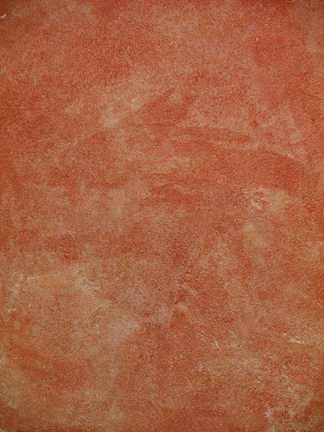
Stucco Rustico is a Traditional interior and exterior textured plaster that epitomizes the rustic old world charm commonly associated with Tuscan environments. I love this treatment for its ease of application and the natural, organic glazed appearance that results when using mineral based plasters and glazes. Whether a rough application or a smooth finish, this treatment holds true to the test of time and, in fact, feels as if time itself stopped to wash the walls personally.
The Rustic Color Palette
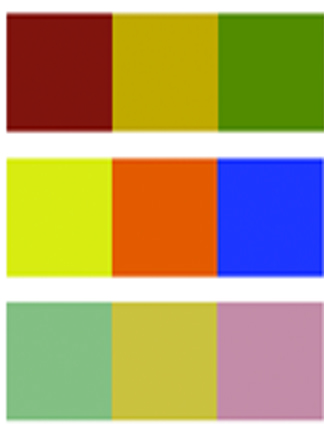
The Rustic Style color palette falls within a distinct range of color tones and is essential in creating a successful Rustic interior. By using the appropriate color tones you can create a variety of design styles ranging from Period and Historic, regional or thematic. Color helps define our experiences within an interior and exterior environment. It affects us on a physical, emotional, and spiritual level and can be calming and passive, expressive and vital.
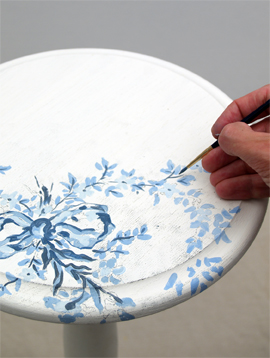
Painted Floral Details
Floral patterns used as accents in fabrics and furniture are common place details in the English Country home. These graceful and organic patterns complement the cozy interior of this style and work particularly well with lace window treatments, an heirloom tea service set and the natural and rustic charm of wooden ceiling beams and slightly irregularly textured walls.