Inside a diner are the dazzling colors, comforting curves, and reflective surfaces that invite us to settle down with a chunky white mug of coffee and a slice of apple pie. It is a place where time slows just enough to notice the details—chrome edges, soft vinyl seats, and the familiar rhythm of everyday life unfolding around you.
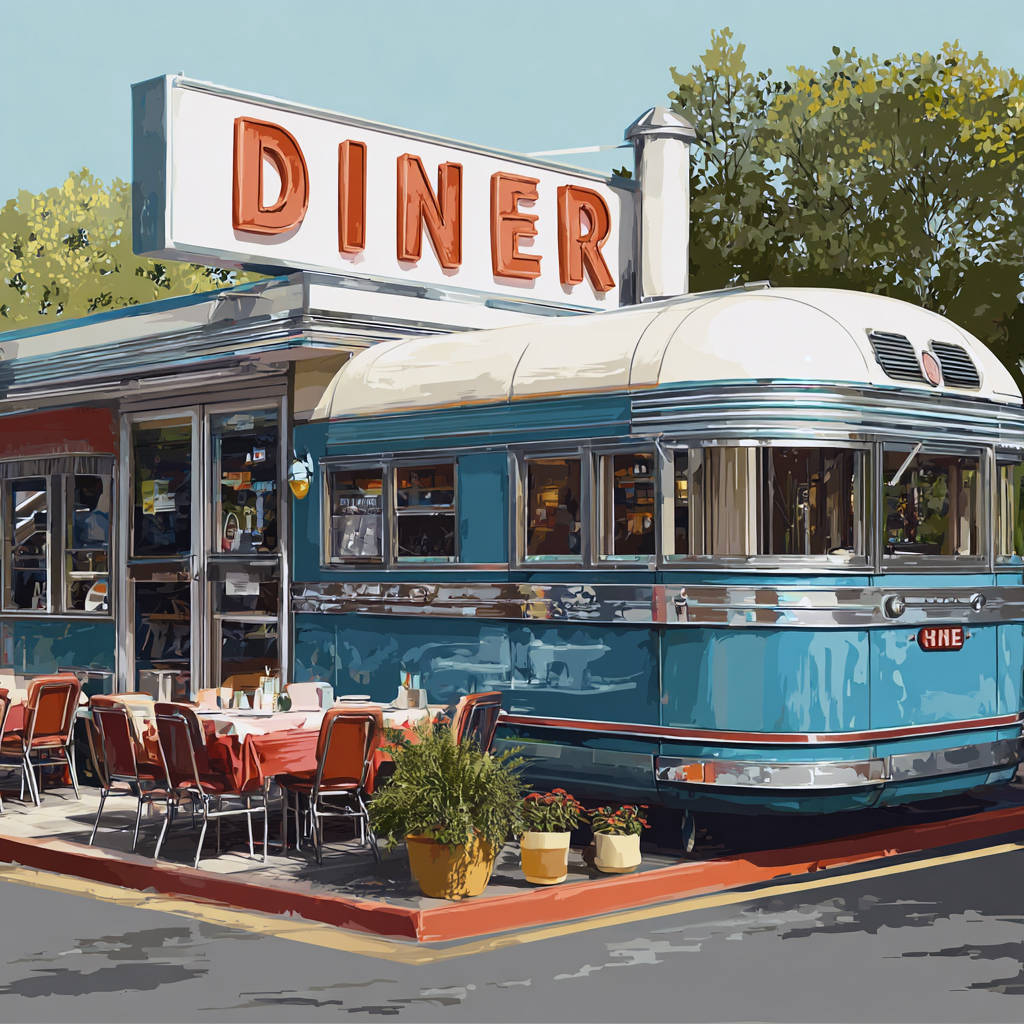
The classic oblong steel and glass diner represents one of the most uniquely charming and completely American of styles, much beloved and sought after. Originally inspired by the glamour of railroad dining cars, the train-car shaped metal restaurant structures became rolling icons of progress, efficiency, and optimism. These compact yet welcoming spaces quickly evolved into a mainstay of 20th-century roadside and “hometown” culture. Although their heyday peaked in the 1950s, diner cars are still manufactured today, carrying their unmistakable silhouette into the present.
Inside a diner are the dazzling colors, comforting curves, and reflective surfaces that invite us to linger. Catch a glimpse of a stranger reflected in the polished stainless steel behind the open grill. Watch plates slide across the counter with practiced ease. Every surface seems to glow—designed not just for function, but for reassurance and familiarity.
Contemplate the donuts turning slowly in their countertop display. Ask the waitress in her pale blue uniform for a refill on that coffee. Watch the streetlights shimmer across the hoods of passing cars outside the wide front windows. And of course, don’t forget to put a quarter in the jukebox—whether it’s the miniature version at each table or the big one humming softly at one end of the oblong room.
Down home comfort
Diner style evokes a special kind of comfort—more public and industrial than we expect from home, yet offering more privacy and solace than a formal restaurant. It is familiar without being intimate, communal without being intrusive.
These are places built for regulars, for lingering conversations, and for quiet moments at the counter. Perhaps your kitchen has the soul of a diner waiting to be released—welcoming, practical, and endlessly forgiving.
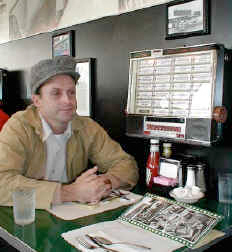
Friendly and familiar
Diners are democratic spaces where everyone belongs. Travelers stop in alongside locals, sharing the same counter and the same simple comforts. Hash browns, biscuits and gravy, eggs any way you like—food that feels honest and dependable.
If you have a spare quarter, you can listen to vintage rock and roll playing softly from the tabletop jukebox, a soundtrack to countless small moments.
Go ahead and have the pie too. You might just find the best apple pie this side of the Mississippi.
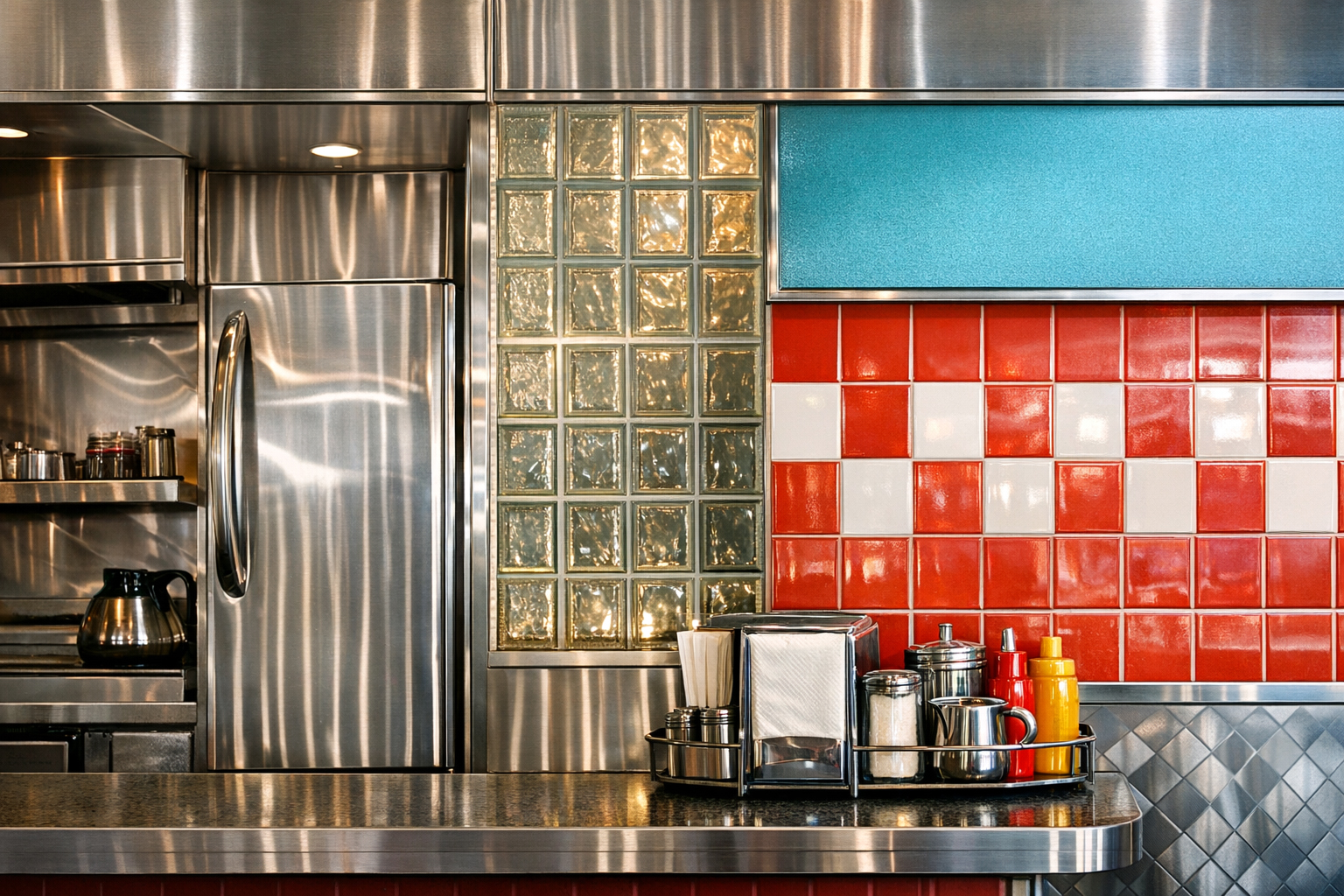
Stainless steel abounds, from kitchen backsplashes and polished refrigerator doors to napkin holders and creamers. These reflective surfaces amplify light and motion, creating an atmosphere that feels lively and open.
Glass blocks, tile, and Formica paneling become mainstays of this style. Once considered cutting-edge materials, they helped define the modern optimism of the 1950s and remain synonymous with diner interiors today.
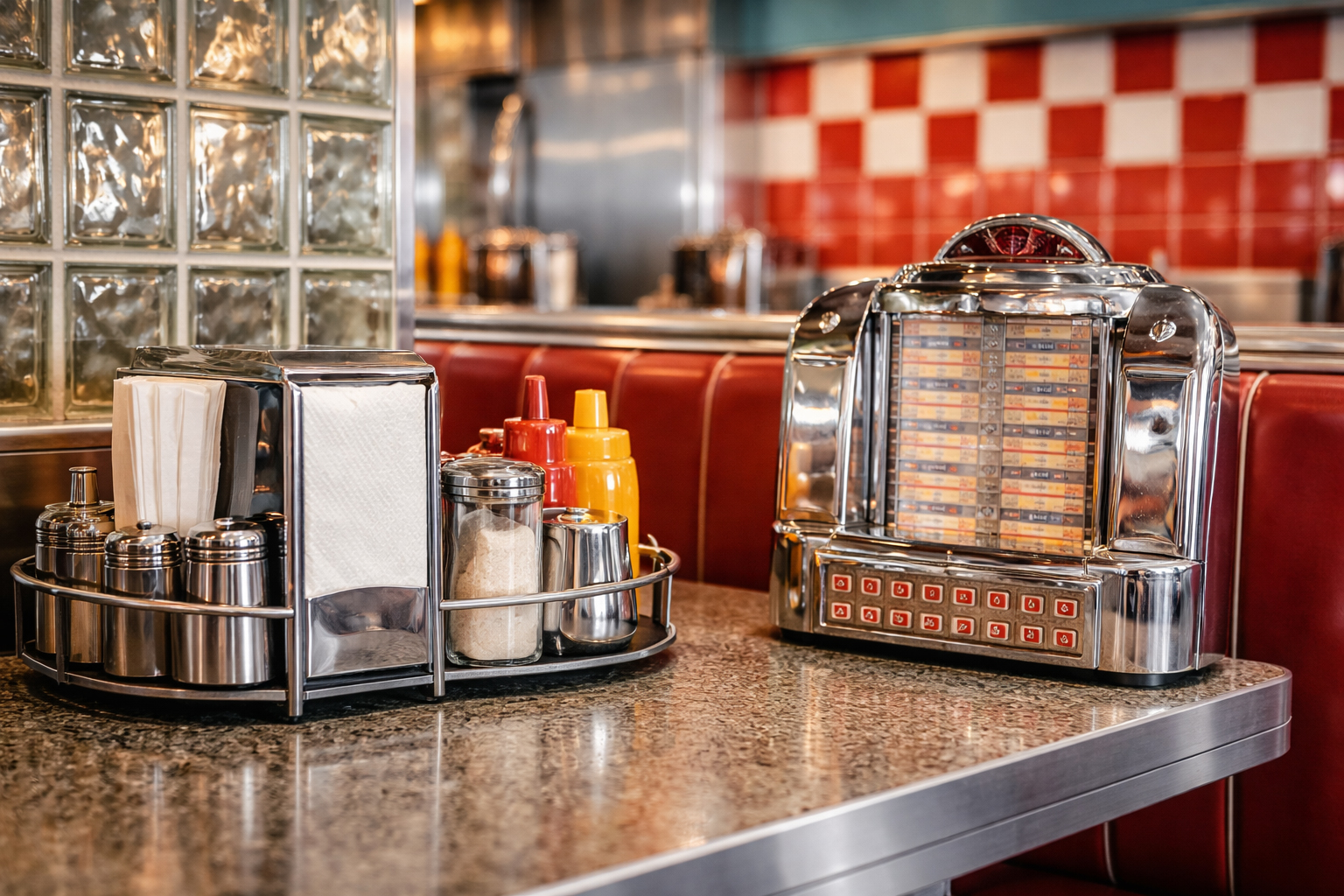
It’s all in the details. Glass bricks catch and scatter light. A nickel jukebox sits within arm’s reach. Everyday restaurant accessories—napkin holders, sugar dispensers, ketchup bottles—become design elements through repetition and shine.
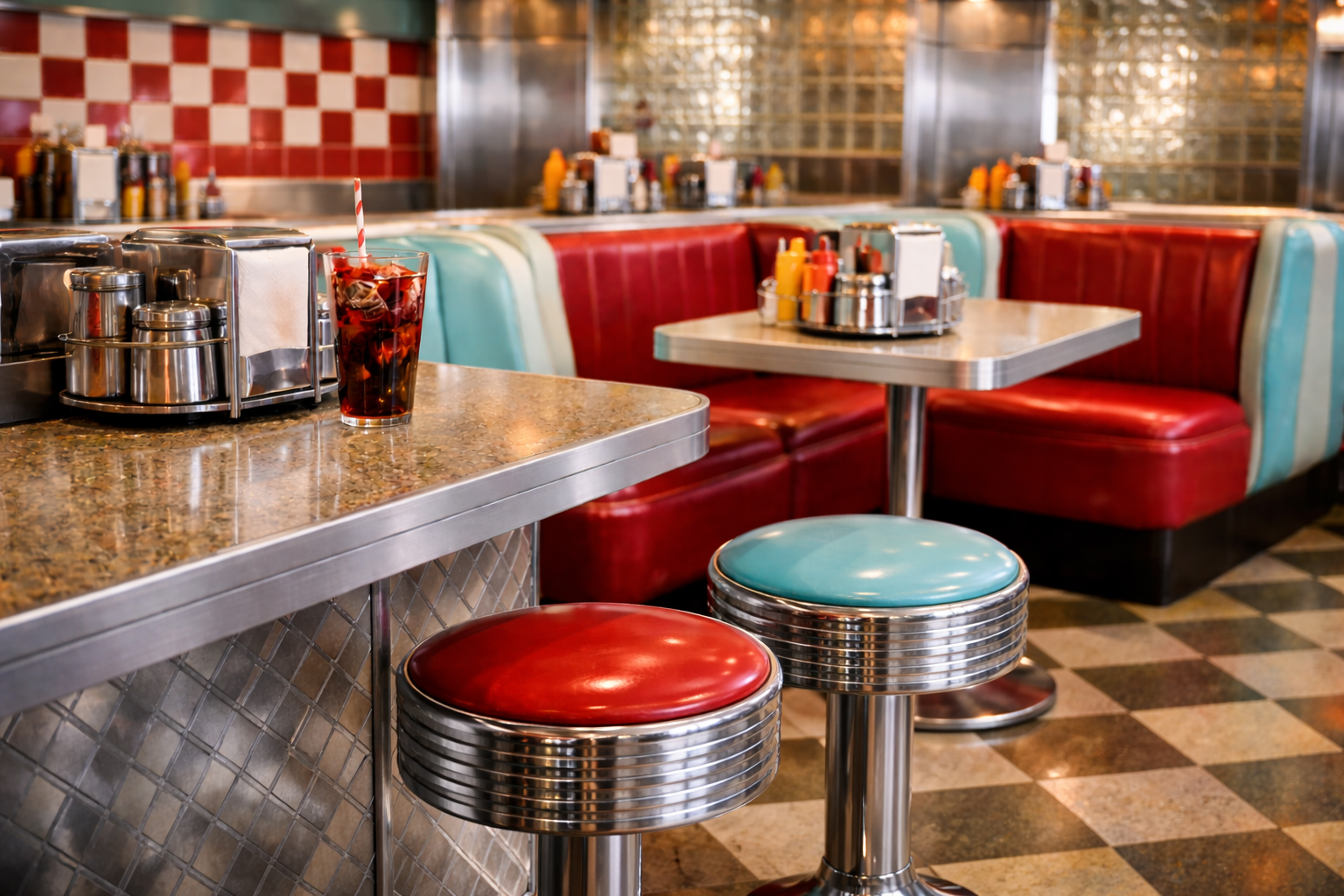
Share a soda pop at the counter, lazily swaying on polished spinning stools. Bright-colored booths curve gently along the walls, often trimmed in red or turquoise vinyl, their rounded backs inviting you to settle in.
Formica tabletops and counters display classic patterns—faux stone, subtle metallic flecks, and spider-web veining in gold, green, and blue—durable surfaces designed for daily life.
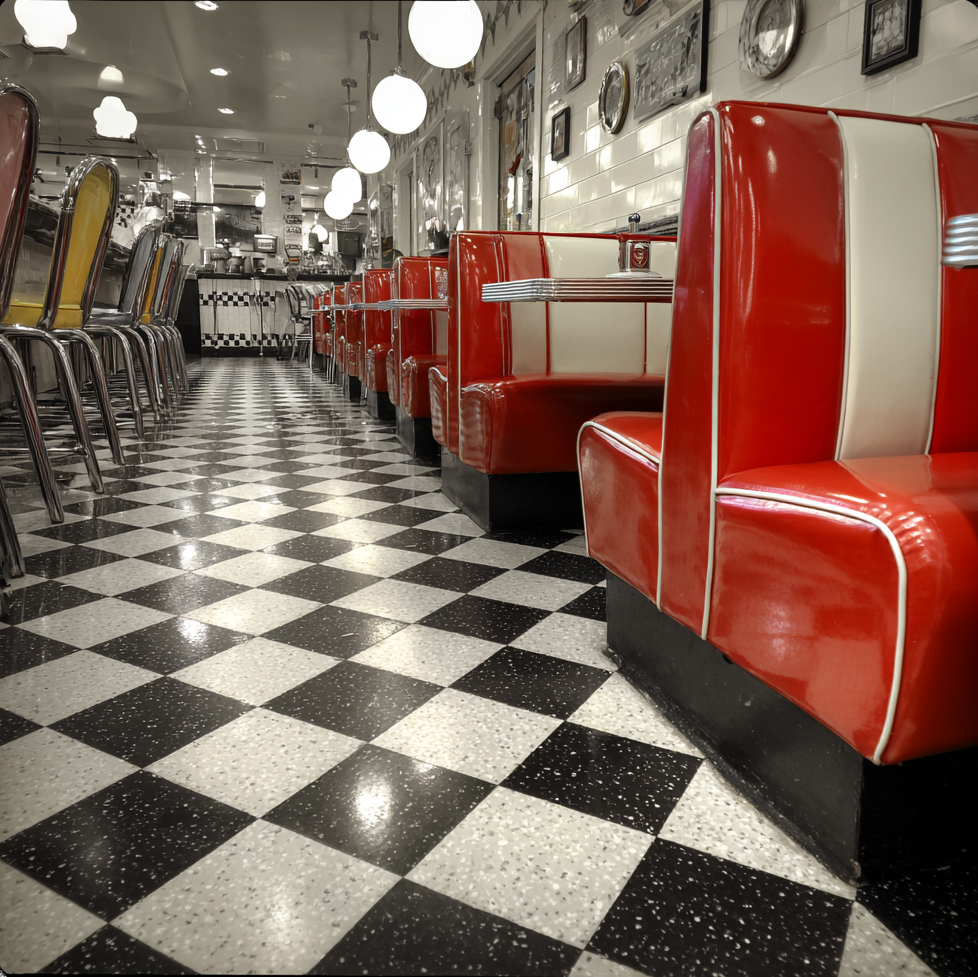
Linoleum is a staple of vintage diner style. A newcomer to interior design in the mid-20th century, it offered durability, color, and endless pattern options.
Most commonly, floors appear as faux granite or classic checkerboard patterns in black and white or red and black—graphic, cheerful, and unmistakably diner.
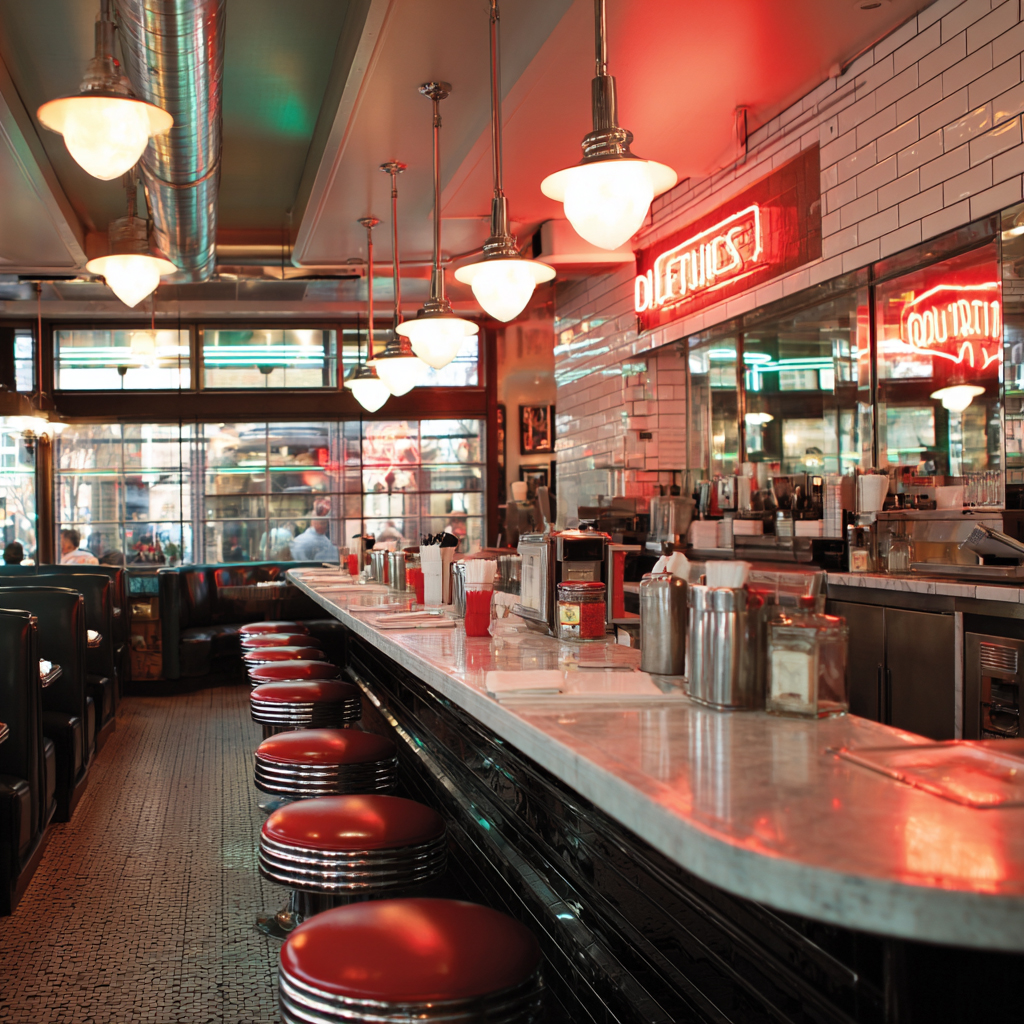
Chrome and glass dominate. Pendant lights glow softly above the counter, while neon signs add a hum of color and motion. Lighting in diner interiors is never shy—it celebrates visibility, openness, and energy.
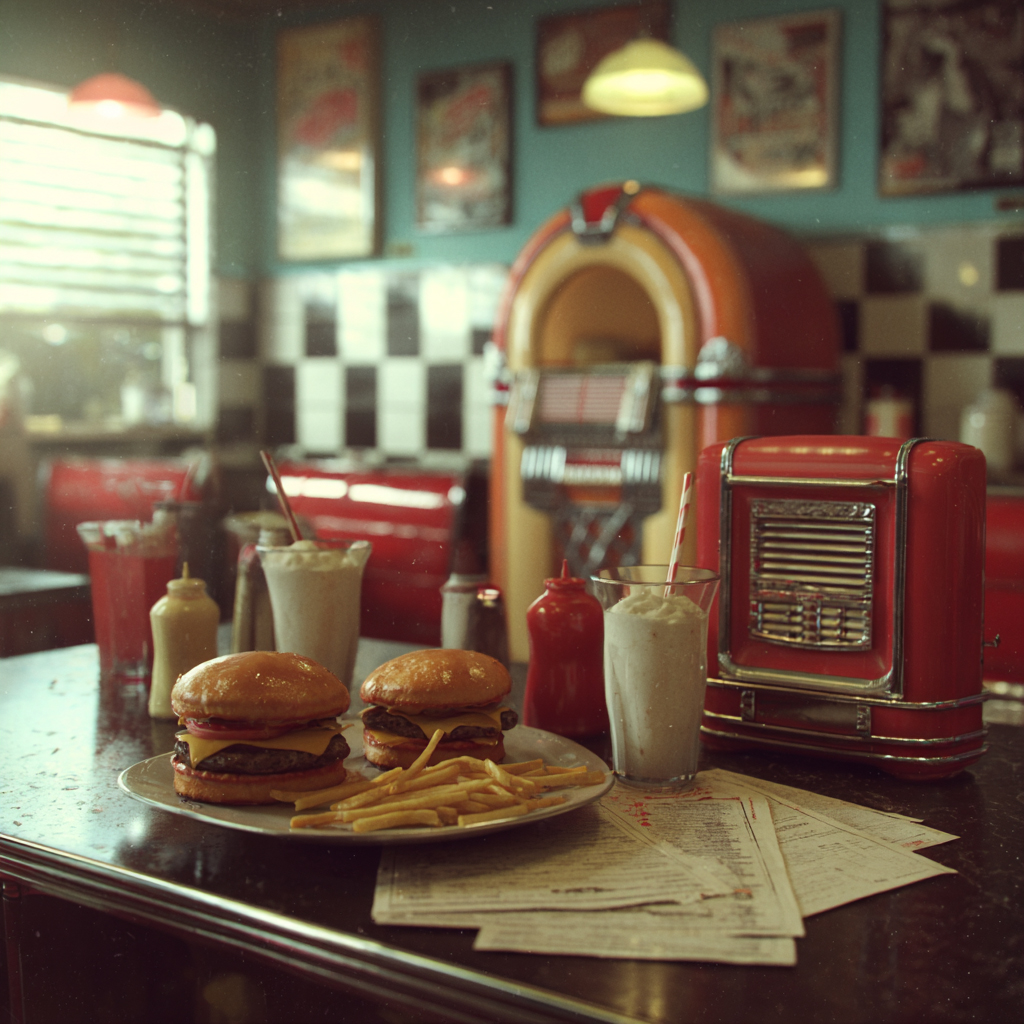
Hamburgers, shakes, and fries—simple food served without pretension. It’s hard to beat with a little pop music playing softly from the tabletop jukebox, the soundtrack to countless everyday stories.
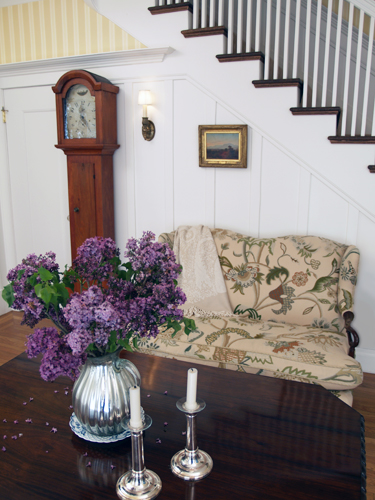
Colonial Amercians drew inspriation from their European heritage. Curent design styles would filter across the ocean and become reinventedin early America. Proportion and scale took reign over ornementation, A neutral color palette of grey blue, greens and rose pinks is readily apparent.
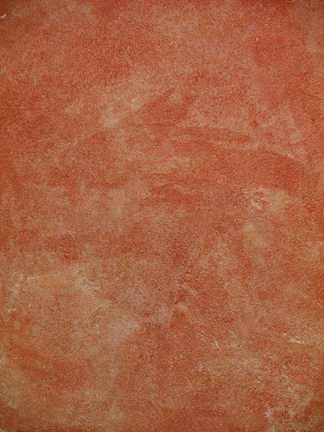
Stucco Rustico is a Traditional interior and exterior textured plaster that epitomizes the rustic old world charm commonly associated with Tuscan environments. I love this treatment for its ease of application and the natural, organic glazed appearance that results when using mineral based plasters and glazes. Whether a rough application or a smooth finish, this treatment holds true to the test of time and, in fact, feels as if time itself stopped to wash the walls personally.

The Rustic Style color palette falls within a distinct range of color tones and is essential in creating a successful Rustic interior. By using the appropriate color tones you can create a variety of design styles ranging from Period and Historic, regional or thematic. Color helps define our experiences within an interior and exterior environment. It affects us on a physical, emotional, and spiritual level and can be calming and passive, expressive and vital.
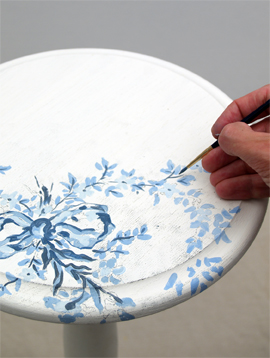
Floral patterns used as accents in fabrics and furniture are common place details in the English Country home. These graceful and organic patterns complement the cozy interior of this style and work particularly well with lace window treatments, an heirloom tea service set and the natural and rustic charm of wooden ceiling beams and slightly irregularly textured walls.