
Door Styles
Perhaps more than any other design element, a door tells the story of a structure's past and present. Entryways can be welcoming or forbidding, rustic or formal, and often express the essential features of the culture that created them—the people they enclose, and even the natural environment they keep at bay.
Across the world, doors become a kind of everyday architecture—functional, yes, but also deeply symbolic. They mark the threshold between public and private life. They announce mood and intention. A door can whisper hospitality with warm wood and softened paint, or it can project confidence with stone surrounds, ironwork, and a bold, saturated color.


A weathered Irish garden gate, embedded in an ancient stone wall, intimates that the space within has kept its secrets for a long, long time—but that those who gain entry will find a landscape of enchantment inside.
These older doors and gates carry the poetry of use: softened edges, lichen stains, the patina of rain and sun. Even the simplest latch becomes an ornament when time has burnished it.
A plainspoken Connecticut red barn door, though designed with pure function in mind, evokes a rich regional history of cornhuskings, barn dances, hay rides—and the honest rhythm of work done well.

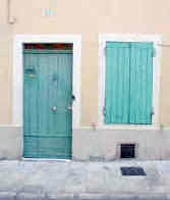
Cuban shutters and Greek door curtains close out fierce sun glancing off blue water.
In these climates, doors do more than greet—they regulate light and air. Louvers, slats, and textiles become architectural tools, shaping shade and breeze into comfort.
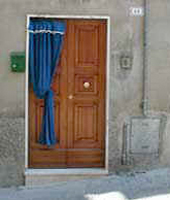
Doors also speak to the owners, telling a story of color, song and family.
Bright paint becomes a signature, a small celebration repeated down a street. The door is a first impression, but also a daily companion—opened, closed, leaned on, listened through.
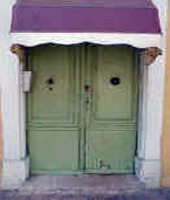
In Provence, France, a rustic door with sun-faded painted panels and an inviting canopy offers a gentle welcome.
Soft color and worn timber feel collected rather than manufactured—proof that beauty often arrives through weather, touch, and repetition.
Blending Traditional and Contemporary Design
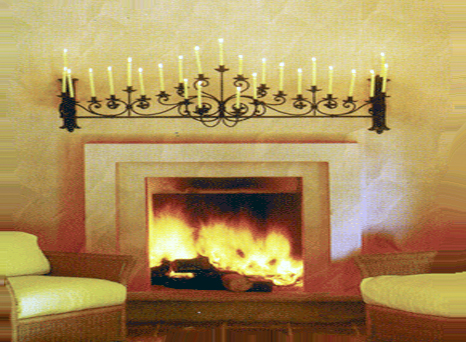
Stucco Veneziano - Venetian Plaster!
Inspired by the ornate plaster-work of Renaissance Italy, decorative plaster has a millennial history, with origins dating back to the Rome of the Caesars and in the art of Ancient Greece.
Andrea Palladio, the famous Italian architect, re-discovered this tradition through his studies and re-proposed it in the splendid Venetian villas that still stand as a distinguishing mark of his career. Stucco Veneziano became an aesthetic solution that, step by step, conquered Venice and Lombardy, then Italy, and finally much of Europe in the XVII century.
Today, Venetian plaster restores the splendor of a classic and prestigious finish—perfect for balancing old-world architectural charm with contemporary interiors. On a modern entry wall or an arched passage, the soft depth of polished plaster echoes the timeless character found in historic doorways and stone thresholds.
Antiquing Video Tutorial
Turn ordinary objects into heirlooms! Creating the 'Classic Antique' glaze finish for objects, furniture, walls and more. This detailed step-by-step tutorial shows how to mix the right colors to create the perfect antiquing solution for any object, furniture, picture frame and more.
Antiquing glazes are especially at home around doors—on surrounding trim, on carved details, on hardware backplates, and on architectural elements that benefit from a softened, time-worn finish.
Doors can express individual personality as well.
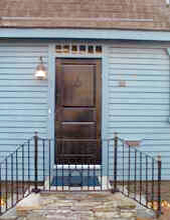
A colonial doorway—simple and unadorned—offers a genuine but somewhat austere welcome.
Proportion, symmetry, and restraint become the ornament. When color is used, it is often disciplined: a deep red, a dignified black, or a historic blue.
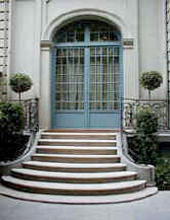
A large, arched stone entryway with imposing steps and formal plantings creates a grand feeling, but the small windows keep the huge doors light and proportionally interesting.
Here, the frame does as much work as the door itself—stone, ironwork, and landscaping combine into a composed sense of arrival.
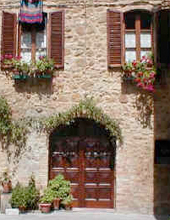
Carefully tended flower baskets that fringe a carved Swedish door suggest delight in a brief, blooming summer—as well as long winters devoted to handicrafts.
Carving, paint, and seasonal details turn the entry into a small ritual—an invitation renewed daily.
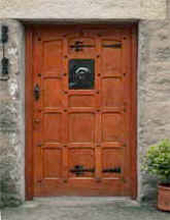
An English door in the Arts and Crafts style offers natural wood, a hand-fitted frame, wrought iron hardware, and a blown glass window: an artisanal design aesthetic as well as a cozy but sophisticated feeling.
Every component feels made by hand—honest joinery, visible texture, and materials chosen for their integrity.
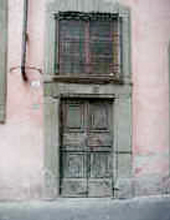
Time-worn doors, found in the Italian town of Lucca, suggest stories from behind these aged portals.
Layers of paint and sun-faded color reveal history in thin, beautiful strata—exactly the kind of surface that inspires glazing and antiquing finishes.
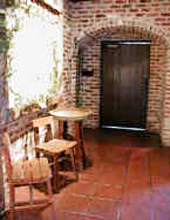
Simple doors set within stone and brick are reminiscent of the days of Speak-easy's—and secret wine vaults.
When the architecture is spare, a single detail can become the signature: a knocker, a keyhole plate, or a bold, moody color that deepens the mystery.
Door Details
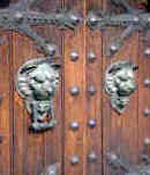
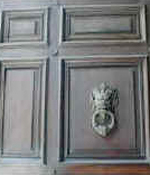
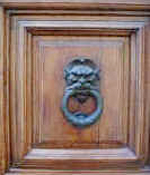
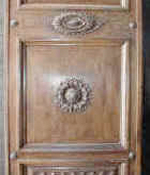
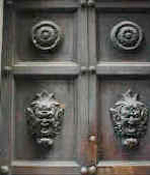
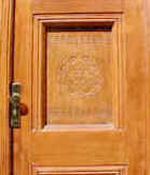
Door details can be regal or quirky. Knockers with animal and face motifs. Hand-fitted hinges, bolts in weathered iron or gleaming brass. Paneling, both recessed and raised. Rich carvings or bas-relief in gleaming solid oak. Even plain pine boards are evocative when painted an intriguing cobalt or an earthy sage.
These small choices shape the entire impression of an entry. Hardware gives a door its “jewelry.” Panel profiles create shadow and rhythm. Paint and glaze create atmosphere—fresh and graphic, or soft and storied. When these elements align, the result is a doorway that feels inevitable, as if it has always belonged.
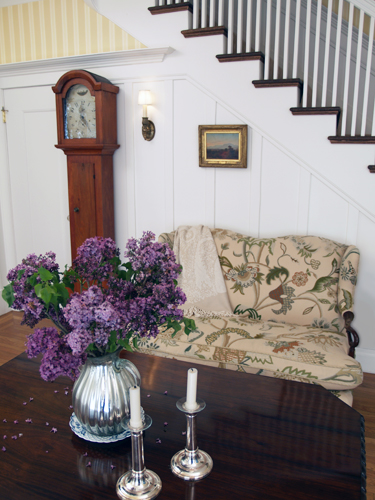
Early American Style
Colonial Amercians drew inspriation from their European heritage. Curent design styles would filter across the ocean and become reinventedin early America. Proportion and scale took reign over ornementation, A neutral color palette of grey blue, greens and rose pinks is readily apparent.
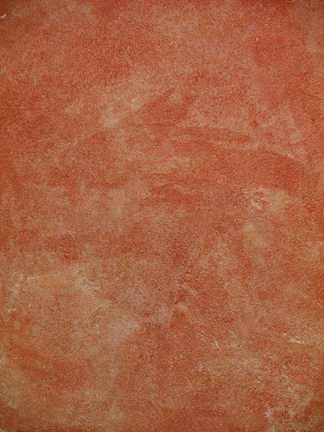
Stucco Rustico - Aged Plaster
Stucco Rustico is a Traditional interior and exterior textured plaster that epitomizes the rustic old world charm commonly associated with Tuscan environments. I love this treatment for its ease of application and the natural, organic glazed appearance that results when using mineral based plasters and glazes. Whether a rough application or a smooth finish, this treatment holds true to the test of time and, in fact, feels as if time itself stopped to wash the walls personally.
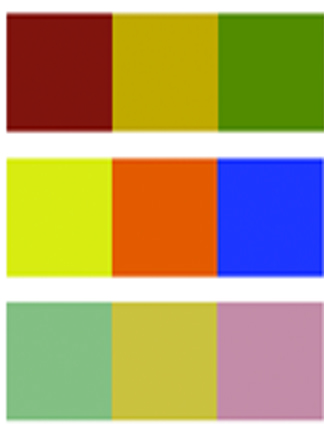
The Rustic Color Palette
The Rustic Style color palette falls within a distinct range of color tones and is essential in creating a successful Rustic interior. By using the appropriate color tones you can create a variety of design styles ranging from Period and Historic, regional or thematic. Color helps define our experiences within an interior and exterior environment. It affects us on a physical, emotional, and spiritual level and can be calming and passive, expressive and vital.
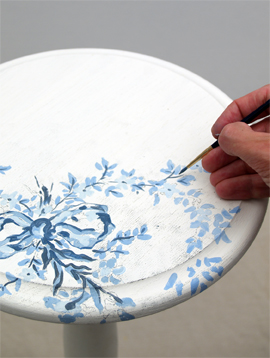
Painted Floral Details
Floral patterns used as accents in fabrics and furniture are common place details in the English Country home. These graceful and organic patterns complement the cozy interior of this style and work particularly well with lace window treatments, an heirloom tea service set and the natural and rustic charm of wooden ceiling beams and slightly irregularly textured walls.