
Arts and Crafts Style
Art and Crafts design style. Interior design ideas for furniture, fabrics, lighting and more to create the Art and Crafts design style for your interior and exterior lifestyle.
The Arts & Crafts ideal stressed simplicity, natural materials like wood and brass, and a return to individual craftsmanship - as opposed to the newly dominant methods of mass production during the early part of the 20th century. It was, in many ways, a design conscience: a belief that the objects we live with should be well made, honest in their construction, and quietly beautiful without excessive display.
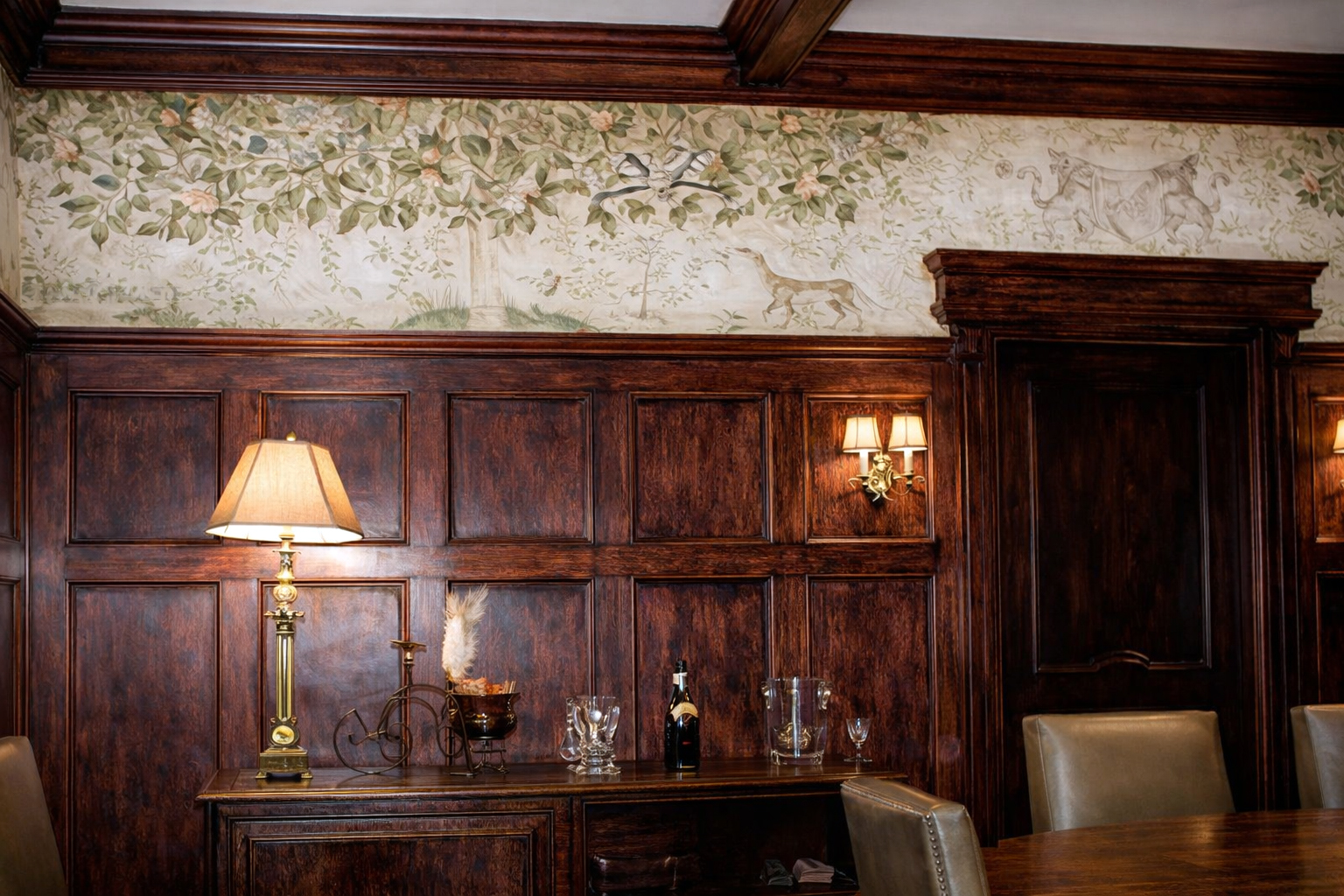
Arts and Crafts Style
Picking up on the styles and philosophies of William Morris and Charles Renie Macintosh, the American Arts & Crafts movement offered a total way of life-grounded first and foremost in the design of the home and its furnishings. It proposed that a house could be more than shelter; it could be a moral and artistic environment, shaped by proportion, harmony, and thoughtful utility.
The Arts & Crafts ideal stressed simplicity, natural materials like wood and brass, and a return to individual craftsmanship-as opposed to the newly dominant methods of mass production. Ornament in Arts & Crafts pieces is limited, and when present, it is meant to echo the function and construction techniques of the piece. Rather than hiding joints and structure, Arts & Crafts celebrates them—allowing the architecture of a chair, a cabinet, or a porch bracket to become its own kind of decoration.
Arts & Crafts pieces were made between about 1895 to 1915 in the U.S. They are based on heavy, rectilinear forms balanced by exquisite details that serve to visually lighten their lines. Visible tenons connect parts of a chair, and corbel brackets reinforce joints to create graceful profiles. Open parallel slats abound, and stained glass is a staple of Arts & Crafts lamps and home design, contrasting the stability of wood with the soothing presence of air and light. In the best examples, weight is never clumsy—solidity is refined by rhythm, spacing, and the careful placement of every rail, peg, and reveal.
Step-by-step Tutorial
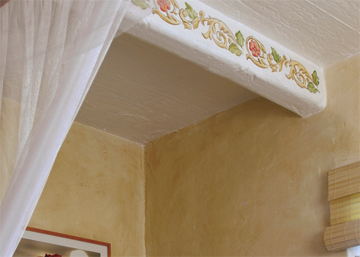
Painted Scrolls on Ceiling Beams
The charm of painted scrolls on ceiling beams needs no introduction. This decorative accent is a delightful addition to any room. And though beams are common elements in many interiors rarely do one see them used as a focal point for decorative applications. Whether you enjoy the old world charm of Italy, or the contemporary flair of a San Francisco loft space, these tech iques can be adapted to suit the most creative inspiration.
Feature Product
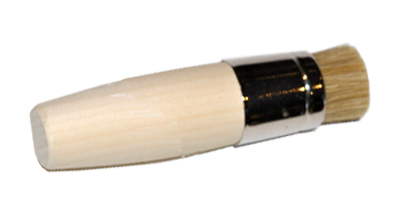
Stencil Brush 432
Stencil Brush Stencil brushes are special brushes with short firm bristles. When used properly they distribute a thin and even layer of paint. This reduces the chance of getting paint under the edge of the stencil. Made in Germany
Purchase Stencil brushes now!
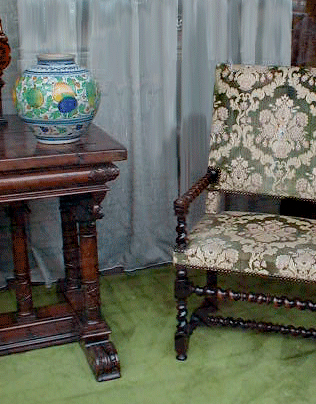
Arts & Crafts house plans emphasize integration of the house and its environment, using indigenous materials and open visual and physical passage between interior and exterior. Porches, terraces, and porte-cocheres are key to this merging of house and nature. Floor plans are asymmetrical and open, often blending living rooms, dining rooms and reception areas into a flow of spaces. A Craftsman home invites you to move through it slowly—pausing at a window seat, lingering beneath a low beam, turning toward the view framed by a porch opening.
American Arts & Crafts was dominated by Gustav Stickley of Upstate New York, Greene & Greene of California, and of course, Frank Lloyd Wright. While Greene & Greene and Wright were heavily influenced by Japanese design, and worked mostly in the high-end market, Stickley and his counterpart Elbert Hubbard tried to bring the earnest 'Craftsman Ideal' to the mass production process. They each designed and manufactured the heavy, slatted oak and leather furniture that now fetches top dollar at auctions. They also published magazines-Hubbard's The Roycrofter and Stickley's The Craftsman: An Illustrated Monthly Magazine in the Interest of Better Art, Better Work, and a Better and More Reasonable Way of Living-featuring bungalow blueprints and other craftwork guides that are still used by devotees of the Craftsman Ideal.
Proportion and scale, along with the interplay between linear movement and the spacious qualities of light play an integral role in creating balance and harmony within the room. This is a style where the quiet intervals matter: the negative space between slats, the measured spacing of mullions, the calm field of plaster beneath a frieze—these are the places where the room “breathes.”
Elements of Arts and Crafts Style
Rustic earth tones
Color in the Arts & Crafts environment is grounded and natural—warm ochres, mossy greens, clay reds, deep browns, soot-black, and creamy off-whites. Yet within this restrained palette, vibrant, colorful patterns underlie the style: stylized florals, vines, seedpods, and repeating motifs appear in wallpaper, textiles, tile, and stained glass. The result is not “busy” but layered—an interior that feels rooted, calm, and quietly alive.
Feature tutorial.
The Parchment colorwash. Creating the impression of aged walls, the Parchment finish evokes a feeling of history and old world charm. The color density varies over the finished surface and creates appearances of lightly mottled parchment. A soft and airy finish, the Parchment glaze is an ideal way to create mood and character in any room. I’ve found it to be an ideal solution for finishing irregular or textured wall surfaces.

Arts and Crafts Inspirations
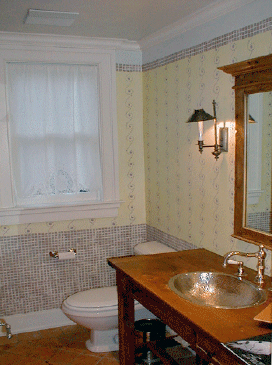 Hand painted wall paper adds a custom element.
 This exterior lamp exemplifies the classic Arts and Crafts form.
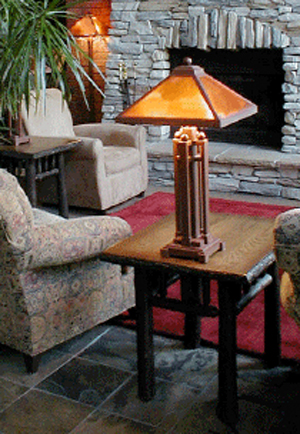 Mica lamp shade with Tiffany base.
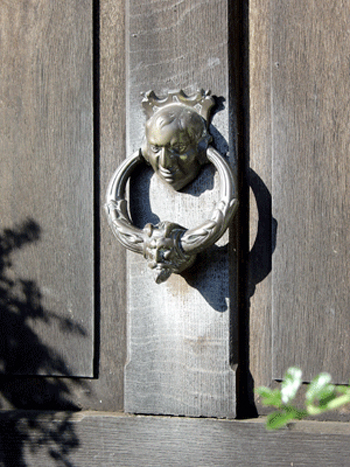
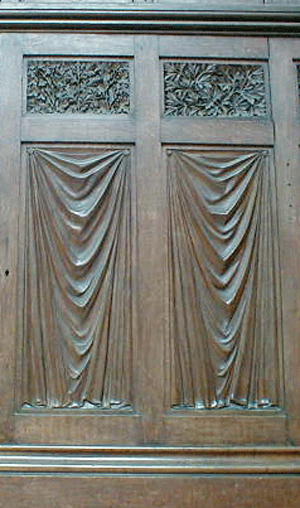 Carved wood features add character to furniture, objects and molding details.
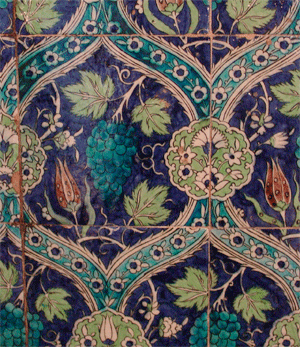 Hand glazed tiles with rich color and patterns.
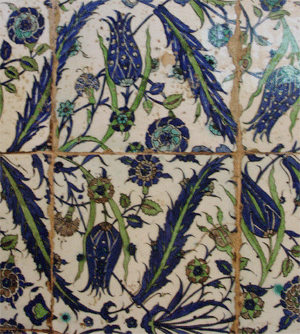 Design motifs often pull from other geographic or historic influences.
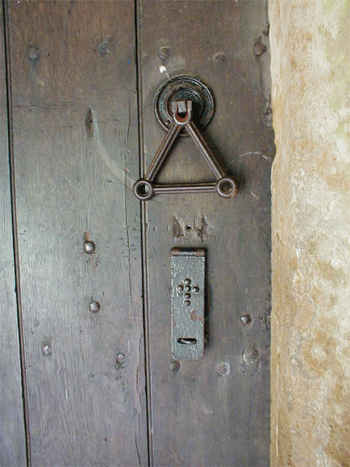
Doors:
As the entrance, and welcoming space of the house, doors and porches played an important role in the Arts & Crafts movement. A Craftsman door is meant to feel protective and sincere—substantial without being showy—often framed by strong trim, side lights, and a porch that acts as a transitional room between house and landscape.
Early Arts & Crafts doors were often of plain plank construction, fitted with elaborate hinges and latches, rather than knobs, inspired by medieval forms. Hardware became jewelry with a purpose: hammered iron, patinated bronze, and honest mechanisms that look as if they could last a century.
Later in the movement, painted motifs became popular--either freehand or stenciled--and were supported visually by the use of stained glass. Small glass panels—leaded rectangles or gentle geometric arrangements—often provided a controlled, welcoming glow.
Windows:
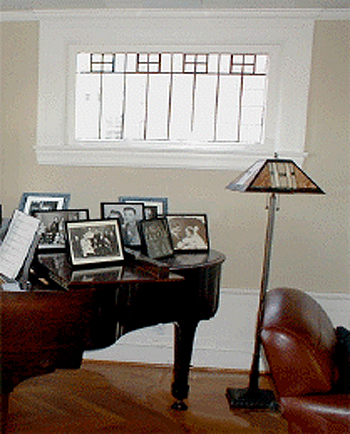
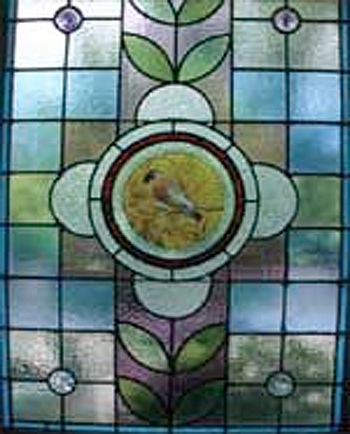
The importance placed on light and air is reflected in the large window areas of later Arts & Crafts houses. Windows were not simply openings; they were instruments for shaping daylight, framing nature, and creating rhythm across a wall.
Sash windows were commonly used, often incorporating leaded glass as a key detail. Elongated window proportions exemplified this style and one would commonly see the pairing of an upper sash bearing small rectangular panes with a tall, single-paned lower sash. Repetition of these panes—quiet and architectural—creates a subtle grid that feels both orderly and handcrafted.
Walls:
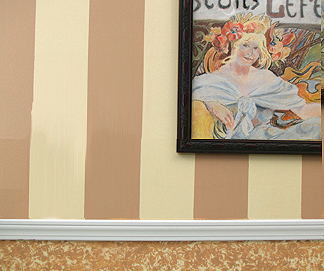
Color played an important role in the decorator's approach, and a 3 part division of the wall into dado, field and frieze was almost always employed. This structure adds balance and containment, keeping patterns and ornament organized rather than overwhelming.
Full paneling on walls was used on occasion, and stenciled friezes were also favored. With the design of fine wallpapers, lead by Morris and Company of London and Warren, Fuller and Co. of NY, wallpaper was also an accepted wall covering. Early papers boasted floral and medieval designs while the later period would take on Japanese influences. Tapestry hangings were widely used in late interiors. The common thread is texture—walls rarely feel flat or sterile; they feel composed, layered, and lived-in.
Step-by-step Tutorial
Painted Stripes
Smart, bold and uplifting, striped walls can quickly transform a modest room into an exciting environment. From elegant and formal to casual and comfortable, the painted stripe offers a variety of design solutions and can be quickly adapted to your interior style. Because of the linear quality of this application rooms tend to feel larger. It works well in entrance foyers, living rooms, dining rooms and bath areas.
Learn how to create this bold stripe finish.
Ceilings:
In the early period, remaining true to medieval designs was preeminent. Treatments included chamfered beams, designed plaster ceilings, with occasional painting and gilding. Ceiling decoration was meant to be felt more than noticed: a quiet structure overhead that gives the room a sense of shelter and intimacy.
Decoration that incorporated painted stenciling was desirable, but as the cost might be prohibitive, ceiling papers, often embossed, became much more common. In the later periods, intricate, prefabricated plaster work was frequently used. Even then, the goal remained the same: craftsmanship that feels integral, not applied for mere show.
Floors:
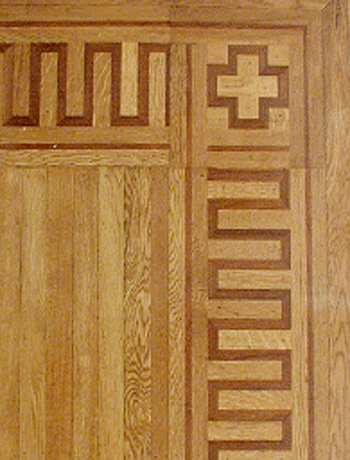
Being true to this movement, it was generally considered that only wood or stone was acceptable for floors. Indigenous woods in America were used, oak or maple, most commonly. A strong floor anchors the heavy lines of the furniture and sets a quiet stage for rugs and textiles.
Carpets were regularly used, and though authentic Indian, Turkish and Persian carpets were favored, often machine-manufactured carpets were the norm. The Arts & Crafts room often uses rugs as islands—defining seating areas and adding warmth—while letting wood floors remain visible as a declaration of honest material.
Furniture:
A strong design element of the Arts & Crafts movement was the regular use of built-in furniture. It was practical and minimized the clutter that was common in the Victorian era. A window seat beneath a bay window or a bench and sideboard against a wall in the dining room might be incorporated into the house design, for example.
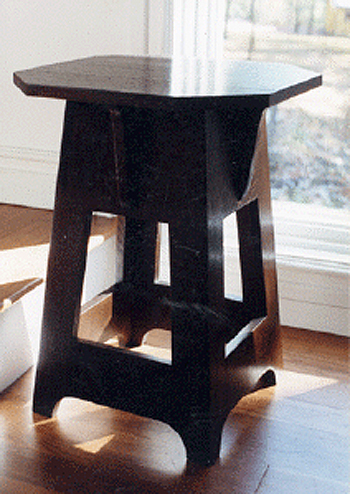
Freestanding pieces echo the architecture: rectilinear forms, visible joinery, solid rails, and thoughtful proportions. Leather, canvas, and sturdy textiles complement the weight of wood, while hand-hammered hardware and subtle inlay provide restraint and refinement.
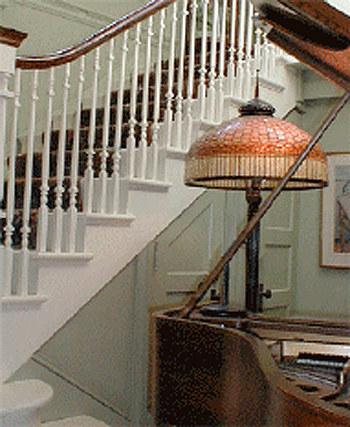
Details:
The desire for openness and light stimulated the use of stained-glass in the Arts & Crafts environment. Doors, windows, wall partitions to lamp shades were all treated with this colorful material. Stained glass acts like a gentle filter—turning daylight into atmosphere and giving a room its signature glow.
With the development of the electric bulb, lighting took on a new meaning within this period. Glass in combination with fine ironwork resulted in innovative ways to accent - as well as provide functional light for - the indoor environment. A well-placed lamp becomes both sculpture and necessity, reinforcing the Arts & Crafts belief that beauty and usefulness belong together.
Stencilling:
In traditional Arts & Crafts interiors, stenciled mosaic patterns and hand-painted scrollwork are more than decoration — they celebrate the philosophy of handcrafted detail and intentional design. These motifs are often found on walls, friezes, and even ceilings, where they echo stylized botanical forms, geometric tiles, or simplified medieval ornament that complements the honest materials used throughout the room.
In this Arts & Crafts powder room, stenciled bands and mosaic patterns interact with richly stained wood paneling and warm lighting to create a layered, harmonious surface that feels both artistic and integral to the architecture. Unlike random decoration, stenciling in this tradition is always thoughtful: it reinforces proportion, guides the eye, and connects the decorative scheme to the room’s structural rhythm.
Applied judiciously, stenciling can unify floors, walls, and ceilings — tying together furniture, textiles, and architectural elements without overwhelming them. Whether used as a subtle scroll along a dado rail or a repeating tile-like pattern beneath a frieze, stenciled ornament retains the Arts & Crafts commitment to craft and individuality.
To explore techniques, patterns, and step-by-step guidance on how to incorporate stenciling into your own projects, visit our Stenciling tutorial. There you’ll find inspiration and practical tips for creating handcrafted decorative surfaces that honor the spirit of historic design while making your space uniquely yours.
Learn to Stencil now!
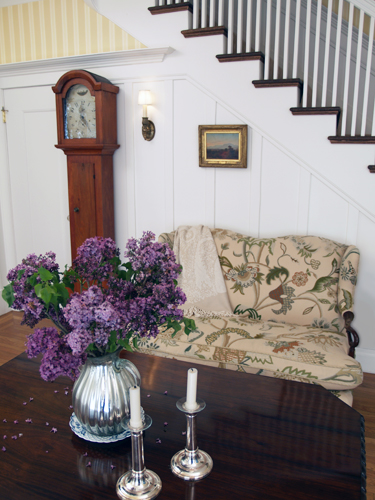
Early American Style
Colonial Amercians drew inspriation from their European heritage. Curent design styles would filter across the ocean and become reinventedin early America. Proportion and scale took reign over ornementation, A neutral color palette of grey blue, greens and rose pinks is readily apparent.
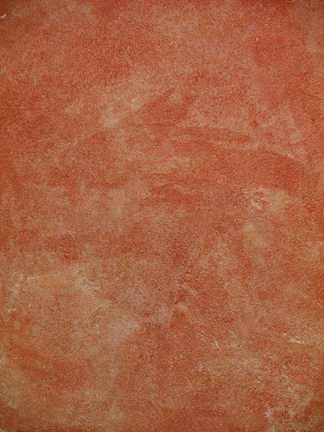
Stucco Rustico - Aged Plaster
Stucco Rustico is a Traditional interior and exterior textured plaster that epitomizes the rustic old world charm commonly associated with Tuscan environments. I love this treatment for its ease of application and the natural, organic glazed appearance that results when using mineral based plasters and glazes. Whether a rough application or a smooth finish, this treatment holds true to the test of time and, in fact, feels as if time itself stopped to wash the walls personally.

The Rustic Color Palette
The Rustic Style color palette falls within a distinct range of color tones and is essential in creating a successful Rustic interior. By using the appropriate color tones you can create a variety of design styles ranging from Period and Historic, regional or thematic. Color helps define our experiences within an interior and exterior environment. It affects us on a physical, emotional, and spiritual level and can be calming and passive, expressive and vital.
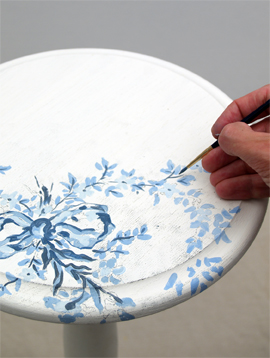
Painted Floral Details
Floral patterns used as accents in fabrics and furniture are common place details in the English Country home. These graceful and organic patterns complement the cozy interior of this style and work particularly well with lace window treatments, an heirloom tea service set and the natural and rustic charm of wooden ceiling beams and slightly irregularly textured walls.